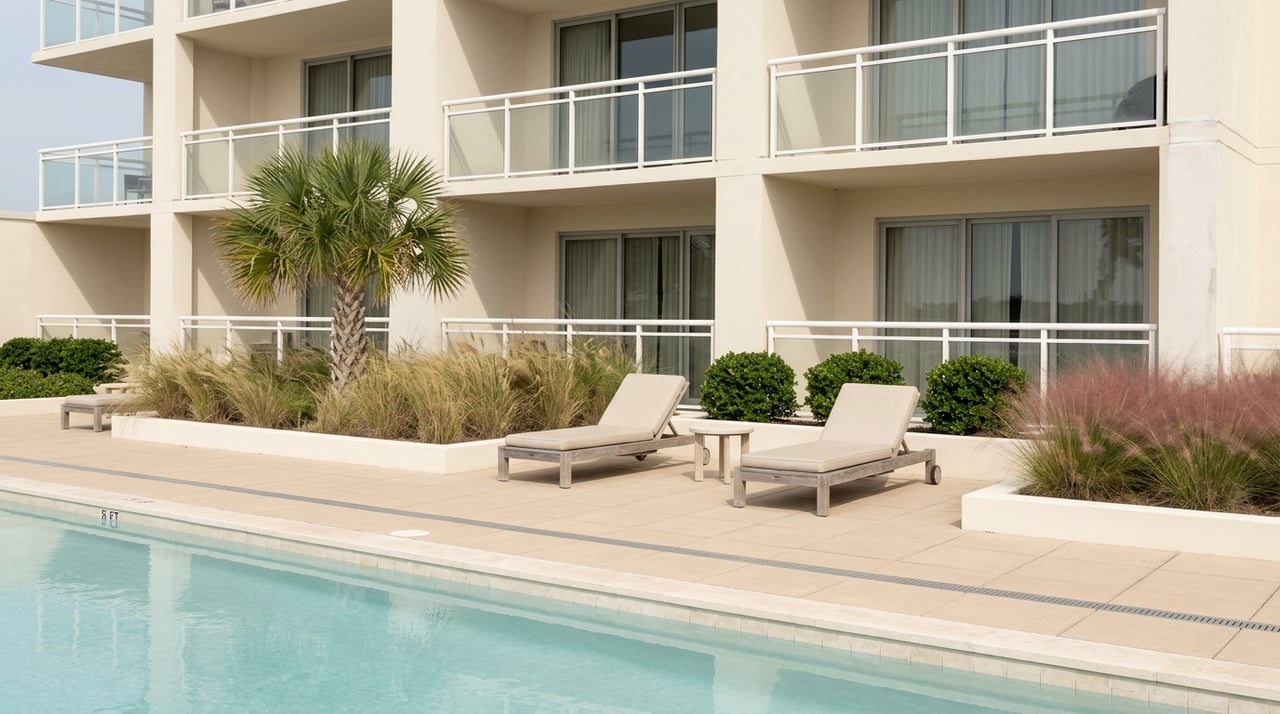
Navarre Condo Buying Tips for a Low-Maintenance Escape
May 21, 2026
May 21, 2026
Dreaming about a beach place without signing up for constant upkeep? In Navarre, that idea often leads buyers straight to condos. If you want a second home, a downsizing option, or a simpler way to enjoy the coast, understanding how condo ownership works can help you buy with more confidence. Let’s dive in.
Navarre Beach sits along about four miles of Santa Rosa Island in Santa Rosa County, with access to swimming, surfing, snorkeling, near-shore reefs, and a well-known pier according to the Florida Department of Environmental Protection. That coastal setting is a big reason many buyers look here when they want an easy beach escape. You get the lifestyle draw of the water without taking on the full workload of a detached property.
For many second-home buyers and downsizers, that lower-maintenance appeal matters just as much as the location. With a condo, you generally own your unit plus an undivided interest in the common elements, while the association handles shared areas and the property it is responsible for. That setup can make it easier to lock up and leave when you are not in town.
The biggest change from a single-family home is shared responsibility. Under Florida condominium law, the association is generally responsible for maintaining the common elements unless the declaration assigns certain limited common element maintenance to the unit owner. The association must also provide for maintenance, repair, and replacement of the condominium property it is responsible for.
That sounds simple on paper, but the details matter. Condo documents may spell out who handles items like windows, doors, balconies, shutters, and other exterior components. In a coastal market like Navarre, those questions become especially important because storm protection and exterior maintenance can affect both your costs and your day-to-day peace of mind.
The tradeoff is clear. You may have less hands-on maintenance, but you also have shared governance, association rules, and dependence on board decisions and reserve funding. If you like convenience and predictability, that can be a strong fit, as long as you know what you are buying into.
A beach condo can feel simple, but your due diligence should be thorough. Florida resale disclosures require that buyers receive governing documents, the annual financial statement, annual budget, and the association FAQ before closing. If applicable, buyers also receive milestone inspection and reserve study information.
Before you make an offer, ask practical questions such as:
These answers help you compare one building to another in a more realistic way. Two units with similar list prices can have very different monthly costs, responsibilities, and ownership experience.
One of the most common surprises for condo buyers is how many costs sit outside the loan payment. In addition to your mortgage, you may be paying monthly association dues, insurance tied to your unit, utilities not covered by the association, and possible special assessments. In Florida, transfer-related costs can also include association paperwork fees, including estoppel certificate fees allowed by statute.
Reserve funding is another major part of the picture. Florida law now ties reserve budgeting to the most recent structural integrity reserve study in certain buildings, and milestone inspection requirements apply to many condominium buildings that are three habitable stories or more once they reach a certain age. For buyers, this means you should look beyond the current fee and ask whether the building’s budgeting appears to reflect upcoming needs.
A lower monthly fee is not always the better value. In some cases, a building with stronger reserves and clearer planning may offer fewer surprises over time. That is especially important if your goal is a low-maintenance second home instead of a property that brings unexpected expenses.
Condo financing is not always underwritten the same way as a detached home. For FHA financing, HUD states that the project must typically be FHA-approved or qualify for Single-Unit Approval, and the review may consider insurance coverage, financial condition, title, pending legal action, and physical condition. That means your loan approval can depend on both your finances and the building itself.
Conventional financing also comes with project-level review. Fannie Mae requires lenders to verify condo project eligibility before delivering a loan. It also identifies projects that operate like a hotel or motel or manage daily or short-term rentals as ineligible as a matter of law.
If you plan to finance a Navarre condo, it helps to ask early whether the project aligns with your loan type. This can save time, protect your expectations, and keep you from falling in love with a unit that may not fit your financing path.
If you want your beach condo mainly for personal use, rental restrictions may still affect your ownership experience. If you hope to offset costs with seasonal rental income, they matter even more. In Florida, rental rules are usually set by the declaration, bylaws, and association rules.
You should ask about minimum lease length, rental caps, guest rules, pet rules, and any approval or registration process. This is especially important because projects with hotel-like operations or daily or short-term rentals can be difficult or impossible to finance with conventional lending. The building’s rental policy and your lender’s project rules need to work together.
It is also helpful to understand how use rights work when a unit is rented. Under Florida law, if a unit is leased, the tenant generally receives the use rights in common areas that are normally available to unit owners, and the association may adopt rules to prevent dual usage by both owner and tenant. That distinction can shape how well a building fits your goals.
In a Gulf Coast location, flood planning should never be an afterthought. FEMA states that flood insurance is separate from a standard homeowners policy, and homeowners policies normally do not cover flood damage. FEMA also identifies its Flood Map Service Center as the official source for flood hazard maps.
For condo buyers, there are usually two layers to think about. First, the association may maintain master property insurance required for the project, depending on the legal documents and lender guidelines. Second, you may still need your own unit-level coverage, and you should understand where the association’s policy stops and your responsibility begins.
This is another reason condo document review matters so much. Insurance is not just about risk. It can also affect financing, monthly ownership costs, and what happens after a storm event.
A condo in Navarre can make sense for several types of buyers. If you want a second home that lets you enjoy the beach without managing a yard and exterior upkeep, a condo may be the right fit. If you are downsizing and want simpler living near the water, it can also be a practical next step.
This path can also work for buyers who value lock-and-leave convenience. When the association handles many shared property responsibilities, it can be easier to spend your time enjoying the coast instead of coordinating maintenance. The key is choosing a building whose rules, finances, and condition support that lower-maintenance lifestyle.
The best condo purchase usually starts with clarity, not just a beautiful view. Before touring too many properties, think through how you want to use the condo, how often you will be there, whether rental income matters, and what level of monthly carrying cost feels comfortable. Those answers can narrow your search quickly.
From there, compare not just units, but buildings. A well-matched condo is about more than square footage or balcony views. It is about documents, reserves, insurance, maintenance responsibility, financing fit, and rules that support the way you want to live.
If you are weighing your options in Navarre, local guidance can make this process feel much more manageable. The right support helps you look past the surface and focus on what ownership will really feel like over time. When you are ready to explore low-maintenance coastal living, The Sunchase Team is here to help you make a smart move with confidence.
Stay up to date on the latest real estate trends.

The Sunchase Team are dedicated to helping you find your dream home and assisting with any selling needs you may have. Contact us today to start your home searching journey!
220 W Garden St Ste 200 Pensacola FL 32502