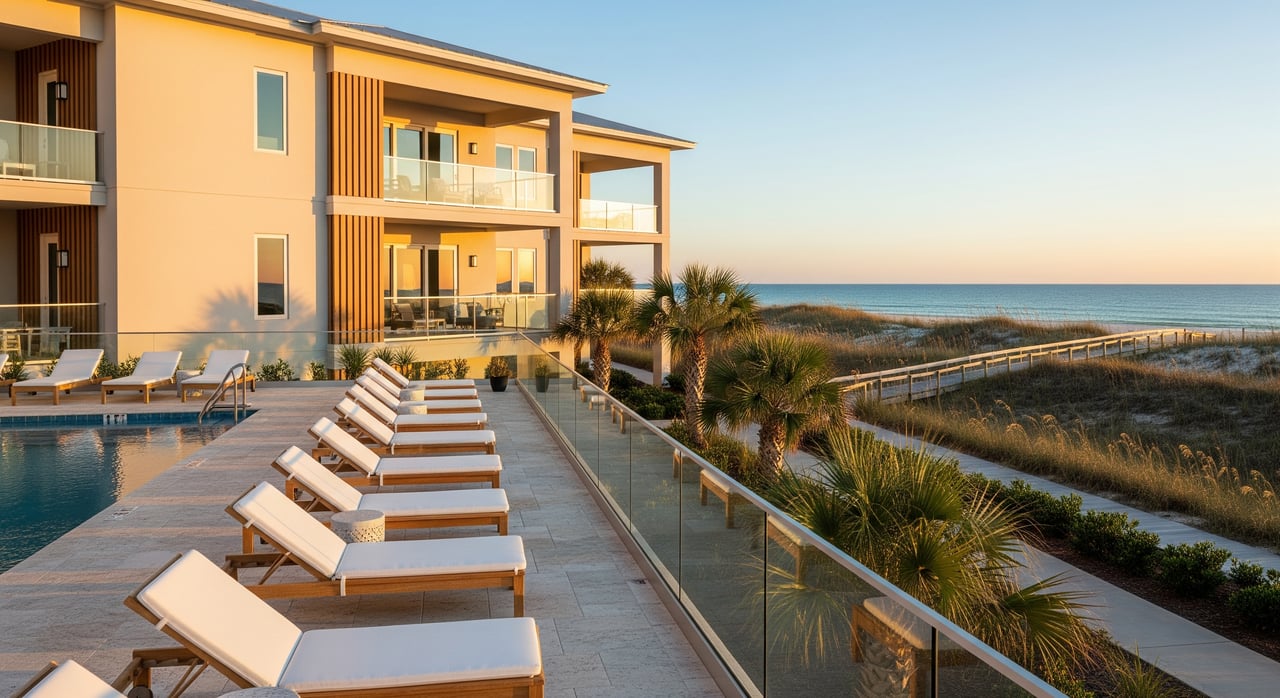
Navarre HOA and Condo Basics for Coastal Buyers
December 18, 2025
December 18, 2025
Thinking about a condo or HOA community in Navarre but not sure what the fees cover or which rules will affect your daily life? You’re not alone. Buying into a Florida association is different from buying a standalone home, and coastal factors add a few extra layers. In this guide, you’ll learn how HOAs and condo associations work in Navarre, what dues and reserves really mean, which documents to review, and the red flags to watch for. Let’s dive in.
Florida recognizes two main association types that you’ll encounter in Navarre. Condominium associations are generally governed by Florida Statute Chapter 718. Homeowners associations are generally governed by Florida Statute Chapter 720. The recorded declaration and the association’s bylaws and rules define what you own, what is shared, and how the community operates.
In a condo, you typically own the unit’s interior, and the association maintains common elements like building exteriors, roofs, elevators, and shared amenities. In an HOA, you usually own the home and lot, while the association manages shared areas such as gates, landscaping in common areas, and community amenities.
Many Navarre neighborhoods also have master and sub-associations. A master association might manage private roads and major amenities, while a sub-association handles a specific phase or townhome pocket. Management can be board-run or professionally managed, depending on size and complexity.
Association dues pay for ongoing operations. Common line items include landscaping, pool care, utilities for common areas, janitorial, security, and management fees. In Navarre, dues are typically billed monthly or quarterly and vary based on unit size and amenities.
As a planning range, small-townhome HOAs often run in the low-to-mid hundreds per month. Waterfront or full-service condos with elevators, security, robust reserves, and building insurance can run several hundred to over a thousand per month. Always confirm exact amounts and frequency with the association.
Healthy budgets include reserves for major work like roofs, exterior painting, elevators, or HVAC for common areas. A current reserve study or funding plan shows expected lifecycles and whether savings match future needs. Thin reserves can lead to special assessments, especially after storms or insurance cost spikes.
Special assessments are one-time charges for big-ticket repairs or emergencies. Review meeting minutes and recent history to understand frequency and what triggered them.
Condo associations typically carry a master policy for the building’s exterior and common elements as defined in the declaration. Unit owners often need an HO-6 policy for interior finishes, personal property, and loss assessment. HOAs usually insure common areas and structures they own, while you insure your home.
On the coast, pay close attention to wind and hurricane deductibles, coverage limits, and any sublimits like ordinance and law. These details affect your risk of future assessments and your personal coverage needs.
The association’s governing documents set the rules. Expect guidance on parking, pets, rentals, noise, architectural changes, and use of amenities. Most communities use an Architectural Review Board or similar process for exterior changes, with application forms and timelines.
Boards adopt and enforce rules according to their documents and Florida law. Typical enforcement tools include warnings, fines, and suspension of amenity privileges, with notice and an opportunity to be heard. As an owner, you have rights to inspect certain records, receive meeting notices, attend member meetings, and vote in elections per the applicable statute and bylaws.
If disputes arise, Florida provides avenues for internal resolution and often encourages mediation before litigation. Procedures and timelines vary by association type.
Navarre’s Gulf Coast location means elevated exposure to wind and flood. Many properties sit within Special Flood Hazard Areas. Check the property’s flood zone and ask for an elevation certificate if available. Flood insurance requirements and premiums can impact your total housing cost.
Coastal wear and tear is real. Salty air can accelerate corrosion and upkeep needs, especially for exterior systems, railings, and elevators. Review maintenance schedules in the minutes and vendor contracts to understand how the association plans for coastal conditions.
Insurance markets across coastal Florida have been volatile. Pay special attention to the association’s master policy, wind deductibles, and claims history. Under-insured associations or high deductibles can translate into higher risk of owner assessments after storms.
You can reduce surprises by front-loading your homework. Here is a simple timeline and priority list.
Request these early and give yourself time to review. If possible, include a contingency tied to receiving and approving them.
Buying into an association in Navarre is about more than views and amenities. It is a financial partnership with rules and shared responsibilities. When you understand the budget, reserves, insurance, and rules, you can buy with confidence.
If you want help requesting documents, building a review plan, or comparing communities, we are here to make it smooth and stress-light. Reach out to The Sunchase Team for concierge guidance tailored to Navarre’s HOA and condo landscape. Guiding You Home.
Stay up to date on the latest real estate trends.
The Sunchase Team are dedicated to helping you find your dream home and assisting with any selling needs you may have. Contact us today to start your home searching journey!
220 W Garden St Ste 200 Pensacola FL 32502